Friday, December 31, 2010

A Year in Numbers

So, it’s the end of the year. Apparently what you have to do is summarise everything with a load of numbers. So here goes. As is also traditional, these may be made up.


13 Months trying to be a theatre producer.
8 Months spent actually producing.
54 Shows I’ve read.
45 Shows I’ve seen.
1 Shows I’ve pretended to see (not including Shakespeare).
14 Shakespeare plays I’ve pretended to see.
14 Shakespeare plays I’ve pretended to see and subsequently discussed.
2 Performances left during the interval.
16 Performances where I regretted not leaving during the interval.
4 Number of projects I’ve produced.
1 Number of plays I’m producing that are definitely opening next year.

Now normally after listing all the numbers you draw fancy charts or make sparkly graphics, but there’s only one number that matters much when you’re trying to be a producer, and that’s the last one. How many plays are you actually producing. And, after many months, I do actually have one. It’s called The Boy on the Swing, by Joe Harbot, and it’ll open at the Arcola Theatre Studio 2 on 9 March 2011.

Friday, October 15, 2010

Press Night


I was lucky enough to get tickets to the press night of Onassis on Tuesday night. There were cameras and celebrities and everything. No one took my picture.

It was interesting to see a show on the same night as almost all of the critics. It's fairly obvious that things can change radically between previews and press night, or indeed just between any performance, that's part of what makes live performance so exciting. Live performance is never quite the same. But it does pose a problem when so much relies on the impact that those reviews will have. Whatever people say about the value of reviews, I imagine that there is little dispute that Michael Billington's one-star lambast in the Guardian is not a good thing (from the producers' perspective anyway), whereas Michael Coveney's four stars in whatsonstage.com is.

For a West End show labelled with the rather ominous "strictly limited run" getting audiences in early is crucial. And the conventional wisdom is that reviews help with that audience, making people book to go see a show who hopefully will then persuade other people to see it and so it will sell out. And by conventional wisdom I'm not just guessing, it's supported by the Society of London Theatre's 2008 Ipsos MORI study which found that 57% of the audience were influenced by the show's "general reputation", 37% by a personal recommendation and 35% by good reviews in the media.

It would of course be foolish to try and put a value on a review, but that 35% influenced by good reviews are likely to be among the people who pass on personal recommendations and contribute to the show's "general reputation" because the show doesn't have time to build up any other reputation (it is, after all, strictly limited).

I wouldn't dream of reviewing the show myself, but when discussing afterwards what sort of shows I would like to put on Onassis didn't immediately spring to mind. It's a difficult question to answer even if I had just seen something with obvious appeal (or queued for hours for it). But it's also a stupid question: what sort of shows. Well, do you mean that I have to limit myself to producing one of dance, opera, new writing, revivals, or a musical and can never do anything else? Because given the right show I'd like to be part of all of the above.

So how do I choose what to I do: well, it's what I'd like to see. That's it. My personal taste. I don't know what will be popular and trying to rely on my non-existent experience of an audience I know nothing about would probably be a tad foolish. I'd like to put on shows that I think are great and I'd like lots of other people to agree with me. Preferably by buying tickets to come and see the show. And then telling all their friends.

Tuesday, September 21, 2010

Reports


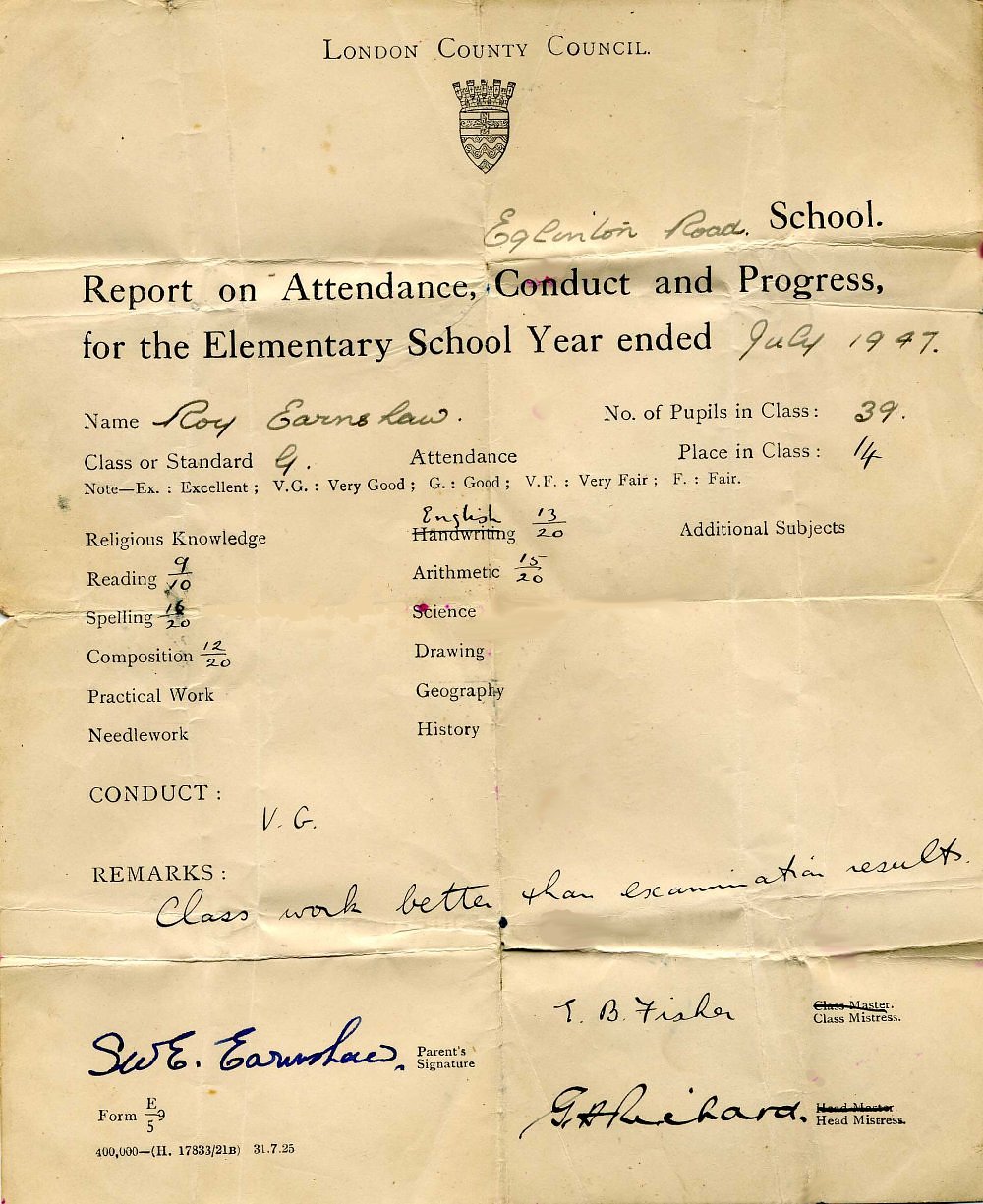
I'm currently writing script reports. Script reports are more crib sheets than actual reports though - the idea of giving plays a score out of five for effort and a grade for attainment is pretty disturbing. And when it comes to giving them a place in the class, well: somewhere under Shakespeare? A couple of directors (you may have heard of them) did recently sit an exam - but that's not quite the same as having to rank, say, Lucy Prebble, Bruce Norris and Jez Butterworth. Perhaps they would have done better if they wrote a play in lieu of an essay. Thankfully there is not yet an AQA exam in Playwriting: budding playwrights tired of the usual route of working through the fringe producing theatres could try this one, though. Certainly I feel like I could use it.
However, it is important to remember what you thought when you first read a play, hence the reports. Once you’ve been working on it for a while I imagine your opinion becomes somewhat biased based on the effort and time you’ve put into it: after all, if you spent two months putting a play together it’s probably in your interests to say it’s great, even if you were able to objectively evaluate it. 
So a record of first impressions. Which is not to say that I won’t change your mind. I already have done so on numerous occasions about a couple of plays. Possibly it had less to do with the quality of the script report though, and more to do with the script itself. Which is how it should be. But it does make me wonder about why I bother with the reports in the first place.

Wednesday, September 8, 2010

The Golden Ticket


Yesterday I managed to pick up half price tickets to see Les Miserables. Although there was no mad rush to pick up the tickets, there was a tube strike. Combined with the repeated showers that sent me scurrying off my bike desperately seeking shelter, it did make the process less than super smooth. But where would the fun be if it were easy?

I got five seats together in the stalls about 13 rows back. At midday there were clearly plenty of seats going. Yet by 7.30pm the theatre was packed; I couldn't see a spare seat in the stalls. So when did all those people get their tickets? They didn't all look like the sort of people who would risk spoiling their night out by not booking up early enough in advance (I know this because I - who am just this sort of person - was wearing shorts; no one else was). And did I mention there was a tube strike? Yet just that afternoon there had been enough seats to give me 5 reasonably priced tickets at a solid 40% discount. So either they had all turned up on the door to buy tickets (to be fair, there was a queue when I arrived at the theatre) or the mechanics of selling tickets are far more complicated than might be initially expected.

I do surprisingly have some experience of this. Here's a short extract from a contract I signed for a student play I produced last summer:

"the Manager may sell tickets through ticket agents or other booking organisations subject to the allowing of credit and the sale of commission discounts and maximum booking fees and any seat allocations being determined by the Manager at his sole discretion PROVIDED THAT no agency deal or guarantee for the Play during the Engagement Period shall be proposed without prior consultation between the Producer and the Manager and any such deal or guarantee shall only be valid if the Producer and the Manager shall have mutually agreed terms and shall have jointly signed any such agreement and it is understood that the Manager has a prior arrangement with Ticketmaster exclusively between the hours of 9pm to 9am Monday to Saturday and from 6pm on Sundays."

It's even more confusing if you read it really quickly in one breath. So even with ticketmaster seemingly opening their arms to transparency it's not entirely clear. Seems I still do have lots to learn about how to sell seats.

But it's not just seats that need to be sold: the Arcola Theatre's Pieces of Vincent has cushions on the floor, and the playing space surrounds the audience - very cool to be surrounded by both video projections and live actors on all sides. Harder to tell who got the best seat though...

Wednesday, September 1, 2010

To book, or not to book?

I like going to the theatre. I go lots. But with the plethora of theatres offering Free Under-26 Tickets I don’t always pay full price. All you have to do is have enough time on your hands to ring round all the theatres well in advance. Add to that the occasional press night (I think I’m invited to these because I’m desperate enough to always be free at last minute to fill empty seats; also, I clap a lot, so must be one of the over-enthusiastic audience members).
So it’s come as a real shock to me when I tried to book up some tickets to Les Miserables. A belated birthday present for a friend, I and several others are treating them to a night out in the West End. We’ve chosen the show. We’ve chosen the date. But we haven’t bought tickets yet.
Imagine a holiday; better, imagine a holiday planned by your super-forward-planning grandparents. The destination (show - bear with me) would be picked. Then the dates. Then the tickets booked and paid for. Then probably half a year would pass before you actually went on holiday. And all the while the holiday operator (theatre producer - you’re getting it) would already have your money, know that you were coming, know that some destinations were more popular, while more marketing was needed for tickets to somewhere like Greece (too obvious?). 
The point is that they travel agents can plan for demand. Because they know what that demand was like in advance. And to encourage people into booking early (so they could cancel flights that were underused, don’t lose money pointlessly) they make early tickets cheap. It’s even called airline pricing.
The logic seems to be that given how expensive it would be to fly halfway round the world with only six passengers, we better make damn sure we know which flights are going to be empty well in advance of take off so we can do something about it.
Now what I’ve learnt about theatre producing so far may be limited, but it does include the fact that playing to audiences of six people is really expensive. Not to mention dispiriting for the cast and crew; no one wants empty chairs (or even empty tables). People booking up in advance are pretty important. But are they encouraged to do so with tempting cheap deals on super advance deals? Apart from Southwark Playhouse, I can’t find a single theatre doing it.
So, Les Mis tickets. Have I booked miles in advance? No. In fact, I don’t plan to book at all. There’s no point. At the end of the day, either I pay full price now and secure good seats, or I wait until the day of performance and see if there are any at the half price tkts booths. 
Hopefully there won’t be a run on tickets that’ll see me queuing at an absurd hour...

Wednesday, August 25, 2010

Theatre Offices


For the past two weeks I’ve been interning at a commercial theatre producer’s office. As might be imagined, what I’ve actually been doing is the boring stuff: filing, making tea, proofing contracts, making more tea, and errands for film stars. Sadly, only one film star. And, no surprises for guessing what the errand was (it involved tea).
However, despite that, I do feel that I’ve learnt a lot about how commercial producing works, in particular, how erratic it can be. And by that I mean you can never know exactly how busy you’ll be. For example, there was one show I was working on (involving the star!) that had been in development in the office for two years. With the prospect of casting coming together and a theatre being available, it is now being put into rapid production. Things change fast. A show closes early, or a show extends, and suddenly what you had planned won’t work anymore.
Which is exciting. But also manageable for a big producer with several shows on, and lots more in development. But for a new producer who doesn’t have productions he can drop into theatres as and when they become available (or the money/contacts/knowledge) it’s rather more difficult.
I’m currently developing one show for production in 2011. But realistically, if I’m to make it through the bizarre circumstances that inevitably come up when producing theatre, I’m going to have to start developing a few more. Even if several of them don’t ever make it to life, I’m going to have to start casting the net out for new productions. Which means reading more plays. The other main thing I did in the office was write script reports. Seems I’ll be doing that inside or outside of an office. 
The plan is to read three plays by next week. We’ll see...

Thursday, August 12, 2010

Up[to]date


So for the last few months I’ve actually been working on a production. It was Caryl Churchill’s Light Shining in Buckinghamshire, and I was working as Assistant Producer. I’m still not sure exactly what a producer does, but I have at least tried to do lots of it. More or less successfully. I had a variety of jobs while I was working on the project, from liaising with Tony Benn, to washing up wine glasses after the Gala Night, negotiating with agents, to carting four tonnes of earth up a fire escape during the get-in. I’m sure these are exactly the sorts of things producers always do. Anyway, it got some fantastic reviews, and was an incredible experience.
I also had great fun as co-producer on the 24 Hour Plays: Old Vic New Voices, (reviews here and here), which in effect involved running around for 24 hours pretending to help out while everyone else (the writers, directors and actors) got on an achieved something. But we did get to sing happy birthday to Kevin Spacey at the after-show party. Although not perhaps as useful in terms of learning about how producing works, it was great to meet so many amazingly talented young people all as foolishly determined to work in theatre as i am. Thanks to the Old Vic for that opportunity.
So, I’ve done some things. I feel like I’ve worked quite hard, although I’m sure it’ll only get busier as I embark upon my own projects, more of which soon.
Perhaps one of the most important things I’ve learnt that a producer has to do is be able to juggle lots of different projects at once. Maybe trying to be more regular in managing to post to this blog will help. Probably not.

Thursday, May 6, 2010

Reading Scripts


So, I’m a producer. At least that’s what I’m telling everyone who asks (worth it for the pitying look I get in response). But once people get past the pity, they invariably end up at incomprehension. I reckon it’s a fairly even split between incomprehension at why I picked such a doomed career path and incomprehension at what being a producer means.


Well, first, being a theatre producer as a career choice may seem incomprehensible: uncertain (at my current stage read “no”) pay, little job security, having to deal with actors. The list goes on. But against it, you’ve got the fact that I love theatre. I love seeing theatre. I love making theatre. I love being involved in theatre. And producing theatre allows me to do all those things.


But what exactly does doing those things involve (the second incomprehensible thing - I wanted to say “the second incomprehensibility” but somehow it didn’t seem to help my cause). Seems no one really knows what a producer does (hands up at this stage, I don’t either - not exactly career progress, I know, but it’s only been two weeks). I don’t yet know everything that producing involves. But that’s hopefully part of what’ll make it exciting; each new show can be completely different. At least it won’t be boring. Terrifying, maybe. But never boring.


Well, one of the things that I am doing is reading scripts. Lots of scripts. Hopefully that’s where my next play will come from. At least, that’s the plan. And the problem is not, as you might think, that there are too many scripts. Although the Bush may receive about 1,500 scripts a year, I don’t.


One way I get these scripts is from the website bushgreen, a relatively new initiative (well, since December) for online publishing of scripts. It allows playwrights, potential or established, to publish their works so that other members can (for a small price) download them. Despite some teething problems (I’ve just spent all afternoon in a focus group discussing the project, so maybe I’m biased), it’s a great site, with lots of potential for budding playwrights to get exposure.


Attending focus groups and reading scripts. I had hoped there’d be more theatre. One day I’ll get there - but I’m certainly not out of the bushes yet.


Thanks to Dano for the photo.

Wednesday, April 28, 2010

Queuing


Last Thursday I got up to go to the theatre at 3.30am. I arrived at 4.15am. I joined a queue already consisting of twenty two people.

It turns out that the first people in line had been there eight hours. They’d arrived before the previous show had finished and actually slept (well, they claimed to have slept) outside the foyer entrance all night. I’m not sure what I expected; I was queuing for Jerusalem tickets two days before the final performance. And so, it seemed, was everyone else. From actors and students to teachers and office workers; there was even a mother bringing her teenage daughter (and I found waking myself up difficult).

I was reasonably hopeful (as I stood in line for five hours) that I would manage to get a ticket. There were many attempts to calculate exactly how many tickets were required by those in front of me, which, despite asking exactly the same question, to exactly the same people, radically altered every half an hour (I can now sympathise with the difficulties facing pollsters). From a rough average, however, it seemed I would be one of the last. 

This made my section of the queue rather frantic: some of us would definitely have spent five hours in vain. Indeed, in several of my fellow queuers it engendered a desperate vigilante streak to emerge. One woman spent three hours patrolling up and down the queue, just to check no one had joined. I’m not sure what she would have done in the event that they had: probably written them a strongly worded letter.

Yet there was also an exciting camaraderie in knowing that we weren’t the only ones desperate to see the show. We all shared that guilt of knowing we’d left it too late. The show became that much more valuable: not only did we each individually think it worth waking up for, but we knew other people did as well. The number of people queuing bizarrely meant that it was more exclusive: only some of us would get in.

The show was amazing: but before I’d seen it, what made me, and others, rate it so highly? Other shows get five star reviews. Other shows have exciting marketing campaigns, big billboards, endless web adverts, flyers, posters, the lot. Yet almost none of them have people queuing outside the night before they start. 

Everyone I spoke to in the Jerusalem queue had been personally recommended by a friend. Most, by more than one. West End shows can spend upwards of £70,000 a week on marketing; but they can’t create that buzz when one or two of your friends unequivocally recommend a show. So as a producer, how can I get that hype?

Easy. Have a really, really great show.

Thanks to Andy Rob for the photo (sadly without queue).

Monday, April 19, 2010

Rewrites


I’m pretty excited about producing. I’m also pretty terrified by it. It’s exciting to work with so many different people - writers, directors, actors, you name it, I get to have some involvement in what they're doing. Yet with so many different people involved, it’s terrifying to think that so much is out of my hands. I’m meant to oversee (and be responsible for) everything that happens to the show: relying so much on other people is therefore fairly nerve-wracking. Especially when that means relying on an audience turning up.
Yet despite the occasional headaches, working with those other people is what makes theatre the most exciting art (well, I would say that). Collaboration is at the heart of theatre, both in its creation and consumption. So the more collaboration the better. Which is why I’m so excited by the fact that the writer and director I’m working with are returning to the script for a couple of rewrites.
A few days ago, Broadway producer and blogger Ken Davenport wrote a piece praising the role script doctors can play in giving scripts an edge. Yet it’s not just a different writer who can inject something new into a script. In fact, it’s arguably far more valuable to the integrity of the piece to have the original author go back over it, rather than just someone with a knack for writing zingers.
Because it’s not just those few new words that matter. It’s the process of collaboration that writer and director engage in which gives the show staying power. And that close collaboration has to be right from the beginning. Because while it should be relatively easy to manage just writer and director, as I add more people into the mix it’ll only get tougher. But if I can get it right, then hopefully that zing of collaboration will keep gaining momentum right until opening night.
And while the thought of extra zing is never unwelcome, having to think about that first performance so far in advance is stressful. But worrying now about opening night will relive the pressure when it finally comes around, right? Somehow, I don’t think so.